
Access all our platforms from a single account.

The End Game has arrived
Quarterly Outlook
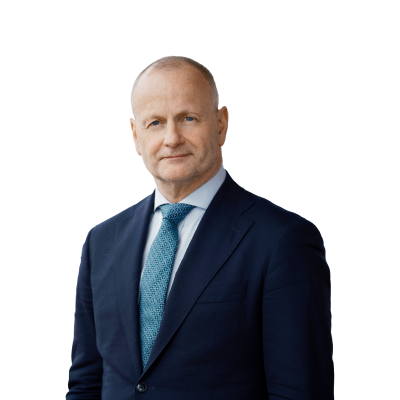
Summary: The global economy has suffered two major shocks in the short space of two years: The Covid pandemic in 2020 and the war in Ukraine in 2022. Read how this has affected the market.
The global economy has suffered two major shocks in the short space of two years: The Covid pandemic in 2020 and the war in Ukraine in 2022. Both will have a tremendous impact on markets and especially on economic policy as these shocks have created new geopolitical priorities by exposing huge vulnerabilities in what turns out to have been an excessively tuned globalised economy. This outlook addresses the tectonic shift already underway in global macro and politics. Gone are the days of ever-falling real interest rates and ever more financialisation, to be replaced by a new rise in productivity as we move the economic agenda to a better and more rational place, despite the gruesome humanitarian news we get day by day from the war in Ukraine.
The starting point for this paradigm shift is that the fiscal restraints that have been a central premise in global economic policies since the 1990s are now gone! The shift was already enormous during the pandemic, but was most stark in the case of the German response to the war in Ukraine. Chancellor Scholz tossed decades of fiscal orthodoxy out of the window in a speech before an emergency Sunday convening of the Bundestag, committing Germany to massive new defence spending and diversification of its energy imports. Now we have the full power of government coming down the pipeline, ending the era when the onus was entirely on the private sector for economic growth.
This is by no means a blessing of what is going on (more deficits), but a reaction to the recent one-two punch of the pandemic and a hot war in Europe bringing with it enormous implications. Foremost among these will be higher productivity gains through new military and energy spending that will increase the full economy’s net spending on infrastructure, basic research and innovation. Take Germany’s sudden commitment to upgrading its armed forces. This is the country with internet connections so slow that they couldn’t home-school during Covid lockdowns. I predict that, through its newfound focus, Germany will be a leader in digital and communications inside the next three years, simply because they must if they want to optimise defence infrastructure.
Many may not realise that the fall of the Berlin Wall in 1989 brought with it a collapse in not only military spending, but also basic research. In the private sector, the focus shifted to constant schemes to boost dividends and buyback schemes that optimised short-term returns. Now, strategic goals will force investment into long-term planning, and with it basic research which will benefit the private sector both in terms of flow of investment funds and innovation spinning from it. Products such as Teflon, Gore-Tex, the internet, GPS and many other basics of modern life started in military research labs.
Let me underline that my belief in the potential benefits of military spending is based on the hope that it can act as a deterrent and on what civilian economies can gain from it, not because I am hoping for increased tensions. I would even argue that this paradigm shift from buybacks to basic research, from short-term gains to strategic resilience, and not least from non-productive to productive, will not only leave the economy in better shape but in the longer term will reduce inflation risks and improve price discovery.
Through the years, the Saxo Strategy Team has always argued that “shocks” are a necessary catalyst for any real change—and these twin shocks will prove to have marked the end of an era. That era began in 1998 when Chair Greenspan bailed out LTCM and in the process created a policy model in which every crisis was met by easier financial conditions which brought no real CPI inflation, even if they did create new asset bubbles that ensured the cycle would rinse and repeat. This cycle died in November 2021 when the Fed and the White House finally got the inflation in everyday goods that all of the previous cycles had avoided. This time the old policy response won’t work, which is why we have the Fed initiating a new rate hike cycle despite US equity markets under severe strain with inflation at a 40-year high. This is the most significant pivot point for geopolitics and markets since at least the Berlin Wall falling in 1989 and China’s inclusion in the WTO in 2001.
I will argue that it’s even bigger as the double whammy of Covid and the war in Ukraine has created the necessary conditions for a macro pivot away from the trend of falling real rates that began all the way back with Fed Chair Paul Volcker’s victory over inflation in the early 1980s. This trend deepened badly into non-productive negative real rates territory in the wake of the global financial crisis and deeper still as inflation broke out with a vengeance after the Covid pandemic. Positive real rates are a necessary precondition for higher potential growth without inflationary costs. Both the fall of the Berlin Wall and China’s WTO entry was really an arbitrage of the cost of labour and energy. The fall of the Berlin Wall created a bigger world with fewer borders to trade and cheaper labour, and the WTO admission of China took this one step further, adding even more cheap labour and cheap energy (China’s explosion of cheap coal-based production). The potential gains from these new forces were already well diminished and even in reverse before Covid, and productivity was on the decline due to over-financialisation, rent-seeking, zombification of companies: all hallmarks of negative real rates. Now, the supply-side shocks of Covid and the war in Ukraine have accelerated our path toward more productivity. Policy simply must take us toward more price discovery and positive real yields as market and government actors fight for investment in a world we now understand is highly constrained by absolute energy, environmental and capital limits.
I am probably too early in prognosticating this necessary shift and I fear a runaway inflation end game before we get to the point described above; central banks are not only late to the party but may have entirely missed the opportunity to bring down inflation in the medium term. Into this reality there is now a dire need for central banks to stop chasing inflation from behind and to get ahead of the curve. This will mean communication and actions that increase the “risk-free rate” dramatically. The market hopes or prays that this will end as demand destruction kicks in, but how can it? The US S&P 500 in price/earnings terms is still at the 80th percentile (extremely expensive), housing prices are at all-time highs, as are art, fine watches and—not least—the savings and investment accounts of the average investor. And as if that were not enough, governments are now moving to mitigate the costs to lower-income households of rising energy. This is done with good intentions but is unproductive in the long run as demand remains high and will only make energy even more expensive.
In conclusion we have three simultaneously cycles impacting the market:
- The ongoing supply crunch from Covid and the war in Ukraine, but also from the world’s physical limits
- The repricing of assets with a backdrop of rising inflation
- The new Fed tightening cycle lifting off in March and set to continue
These will eventually lead to two key outcomes
- Strategic macro policies: an increase spending on energy and defense priorities, but also supply chain diversification to remove single points of failure for strategic industries.
- Negative real rates turning more positive as an indication that the global economy is set for a major productivity boost: away from short-term financial gains and rent-seeking and toward tangible assets, infrastructure and a reaffirmation of the social contract.
PS: I have actively decided not to comment on the war in Ukraine specifically, but everyone should know that the SaxoStrats team and I believe in freedom and self-determination, and the Russian invasion of Ukraine violates those principles.
Explore products at Saxo