QO_Q1_2022_In-platform_328x120_Steen2

Fuelling the energy crisis

Quarterly Outlook
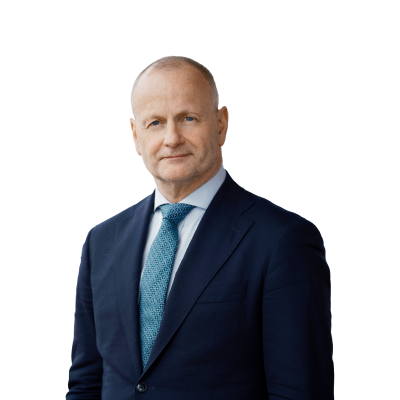
Summary:  Since late 2020, the Saxo Strategy Team has held the view that the real economy is far too small for the financial and economic agendas of governments, central banks and the green transformation. This prompted our call for higher inflation throughout 2021, which crystallised with the inflation spike in the second half of 2021, capped by a 7 percent US December CPI print. In short, inflation is now a reality, but even after the significant pivot in Fed rhetoric in late 2021, the central bank is badly behind the curve. It is still slowly withdrawing from the easiest financial conditions in history, even if the sense of urgency is rising. That urgency will likely only mount from here as inflation fails to fade as it hopes.


It seems that before his re-nomination for a second term, Fed Chair Powell was read the riot act by the White House. Biden’s team likely made it clear that if Team Powell wants to lead the Fed, it needs to focus on the 150 million Americans at work seeing their pay reduced every month in real terms by the Fed’s inaction on inflation, rather than focusing on maximising accommodation to support the remaining 6 million unemployed in finding work. Both Powell and Brainard (the incoming vice-chair) complied and forcefully so. The consensus is now that the Fed will stop expanding their balance sheet by mid-March, will hike interest rates by 75-100 basis points in 2022, and even start to reduce its swollen balance sheet simultaneously with rate hikes earlier than formerly expected. This is a tall order for a central bank that has run a lower-for-longer framework since Fed Chair Greenspan and 1998 (LTCM). 

The critical chokepoint for real economic growth from here is the de facto energy crisis we are experiencing—one that will only continue due to decades of underinvestment in the space and the continued lack of financing for the fossil fuel energy that still drives the bulk of energy inputs into our economy. This lies at the centre of our “world is too small” theme. In 2021, we saw rises in energy and electricity prices that have not been seen since the 1970s. Electricity prices in Europe rose to ten times the long-term average, in part on supply disruptions from abroad, but also aggravated by the lack of baseload as Germany shutters nuclear plants and the new alternative energy sources are unable to replace critical baseload. 

In short, we have created a monster in which the policy priority—going green—is fuelling the energy crisis. The more we operate without a tangible plan for securing a smooth path to the hoped-for future of green energy, the more our economies will be disrupted in chaotic fashion due to inadequate baseload when famously inelastic energy demand exceeds generation capacity. The policy response so far has been to propose an even deeper commitment to green energy and to ignore the required improvement in grids, transmission, and better use of conventional energy. The worst oversight by policymakers is the inability to admit the reality that alternative energy alone cannot power the future at current living standards. What the world needs is a Manhattan Project 2.0, this time not to build a bigger bomb, but to find and develop new higher-density, low-carbon energy sources, most likely based on nuclear fission and fusion.

The great irony of the sacred go-to plan of ever-greater commitments to the current green agenda is that as long as China, India and Russia make up 50 percent of global electricity consumption, and 70 percent of that comes from burning coal, the number of battery EVs on the roads and Europe’s green agenda will have little or no impact. If, on the other hand, we commit to a new Manhattan Project that seeks out cheaper energy—not more expensive energy—we can put ourselves back on the road toward ecological sustainability and a growing economy.

We see 2022 as the year that will see the energy crisis changing the definition of green, bringing back fossil energy again from the cold until we can innovate our way to better energy sources. EVs charged from expensive windmills and CO2-spewing coal are a dead end for addressing climate change. The big revolution in 2022 will be to begin building our energy future on a foundation of realism, not fantasy.

Explore Saxo’s products

Disclaimer

Confidentiality and Usage:
You may not reproduce, distribute, or transmit this material or any portion thereof without prior written permission from Saxo.

Nature of Information:
The information provided herein is based on current market conditions and analysts' opinions, which may reflect personal views of the author, and are subject to change without notice. This material does not include a record of any trading prices, or an offer of, or solicitation for, or endorsement to enter into any transaction in any investment product. Any forecast on the economy, markets and economic trends of the markets provided is not necessarily indicative of the future or likely performance of the investment product subject of this material.

Responsibility and Liability:
Saxo accepts no liability for any use that may be made of these comments or for any consequences that arise from such use. Saxo does not guarantee the accuracy or completeness of any information provided and assumes no liability for any errors, omissions, losses, or damages resulting from the use of this information.

The information provided in this material is solely for information only. It is intended for general circulation and does not take into account the specific investment objectives, financial situation or particular needs of any particular person. Accordingly, it should not be relied on or treated as a substitute for specific advice concerning specific situations of any person. Please seek advice from a financial adviser regarding the suitability of any investment product taking into account your specific investment objectives, financial situation or particular needs before you make a commitment to purchase an investment product. In the event that you choose not to seek advice from a financial adviser, you should consider whether any investment product mentioned in this publication is suitable for you.

Notwithstanding the above, insofar as any information provided herein contains research analyses or reports concerning any investment product authored by any foreign research house and is issued or promulgated to a person in Singapore who is not an accredited investor, expert investor, and/or institutional investor, Saxo Capital Market Pte. Ltd. accepts legal responsibility for the contents of this material to the extent required by law. Recipients of such material are to contact Saxo Capital Markets Pte. Ltd. in respect of any matters arising from, or in connection with, this material.

Risk Disclosure:
Trading in investment products involve significant risk, including the risk of losing your entire investment. Historical returns are not a guarantee of future returns. Prices can both rise and fall, and there is a risk that you will not get back the money you invested.

Conflicts of interest:
The author may hold positions in the investment products mentioned. The author does not own positions in the underlying investment product exceeding 0.5% of its market capitalisation, save as otherwise declared. The author is not permitted to trade the mentioned investment products within the first 24 hours after the publication of this article.

Saxo maintains partnerships with companies that compensate Saxo for promotional activities conducted on its platform. Additionally, Saxo has agreements with certain partners who provide retrocession contingent upon clients purchasing specific investment products offered by these partners. While Saxo receives compensation from these partnerships, all content is conducted with the intention of providing clients with valuable options and information.

Publication details:
If any listed companies are the subject of the material, the content has not been submitted to the companies in question prior to publication.

Please refer to our full disclaimer and notification on non-independent investment research for more details.

Saxo Markets
88 Market Street
CapitaSpring #31-01
Singapore 048948

Contact Saxo

Singapore
Singapore

Saxo Capital Markets Pte Ltd ('Saxo Markets') is a company authorised and regulated by the Monetary Authority of Singapore (MAS) [Co. Reg. No.: 200601141M ] and is a wholly owned subsidiary of Saxo Bank A/S, headquartered in Denmark. Please refer to our General Business Terms & Risk Warning to consider whether acquiring or continuing to hold financial products is suitable for you, prior to opening an account and investing in a financial product.

Saxo is part of the J. Safra Sarasin Group.

Trading in financial instruments carries various risks, and is not suitable for all investors. Please seek expert advice, and always ensure that you fully understand these risks before trading. Trading in leveraged products such as Margin FX products may result in your losses exceeding your initial deposits. Saxo Markets does not provide financial advice, any information available on this website is ‘general’ in nature and for informational purposes only. Saxo Markets does not take into account an individual’s needs, objectives or financial situation.

The Saxo trading platform has received numerous awards and recognition. For details of these awards and information on awards visit www.home.saxo/en-sg/about-us/awards.

The information or the products and services referred to on this website may be accessed worldwide, however is only intended for distribution to and use by recipients located in countries where such use does not constitute a violation of applicable legislation or regulations. Products and Services offered on this website are not intended for residents of the United States, Malaysia and Japan. Please click here to view our full disclaimer.

This advertisement has not been reviewed by the Monetary Authority of Singapore.

Apple and the Apple logo are trademarks of Apple Inc, registered in the US and other countries and regions. App Store is a service mark of Apple Inc. Google Play and the Google Play logo are trademarks of Google LLC.