
Access all our platforms from a single account.

USD/JPY after intervention: scenario playbook for traders

Key points:
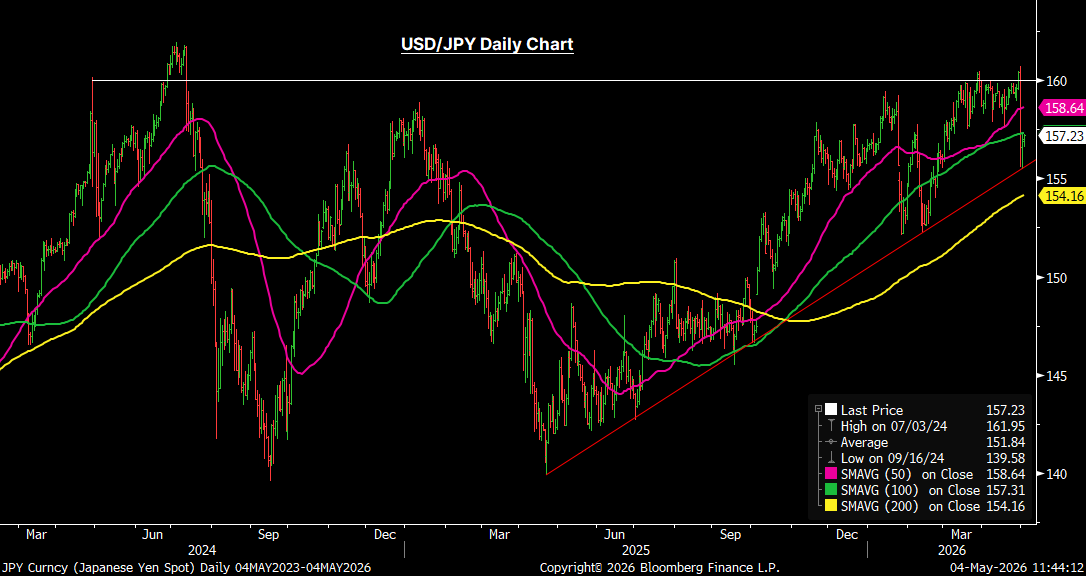
- Friday’s intervention has likely bought Japan time, not changed the USD/JPY trend yet. The chart still shows a broader uptrend, but the 160–162 zone is now a clear policy ceiling where intervention risk rises sharply.
- The bigger issue is that yen upside is hard to sustain if oil stays high. Japan is a major energy importer, so elevated oil keeps pressure on the trade balance, imported inflation and real incomes.
- That means intervention can slow yen weakness, but a cleaner JPY rally likely needs quick oil downside, softer US yields, or a more forceful BOJ signal.
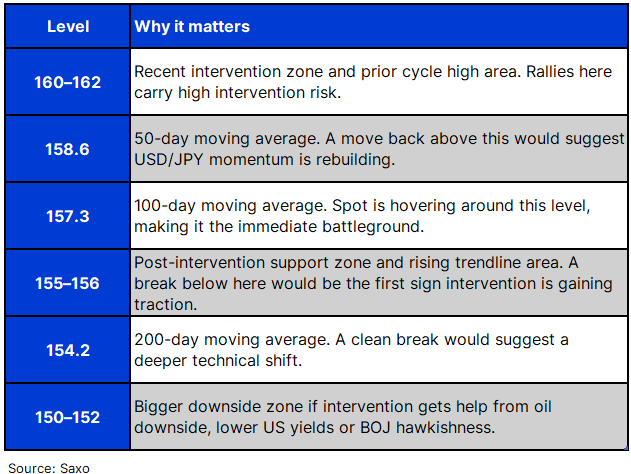
Chart: key USD/JPY levels
Three scenarios for USD/JPY
Scenario 1: Intervention only buys time - USD/JPY drifts back towards 160
This is the base case unless the macro backdrop changes. Intervention can make investors nervous about chasing USD/JPY higher, but unilateral FX intervention rarely changes the trend by itself when rate differentials, oil prices and capital flows remain yen-negative.
What drives this scenario
- Oil stays elevated, keeping pressure on Japan’s import bill.
- US yields remain firm as markets price sticky inflation and a cautious Fed.
- BOJ remains gradual and does not validate intervention with a stronger rate-hike signal.
Market implication
USD/JPY may stay in a 155–160 range, with intervention risk capping the topside but macro support limiting the downside. The 155–156 area may remain an important zone to monitor, as USD support could re-emerge there unless oil rolls over or US yields fall.
Positioning framework
- USD/JPY above 159–160 may warrant caution, as intervention risk is highest in this zone.
- Traders could monitor the 155–156 area for signs of whether USD support is re-emerging or whether intervention pressure is gaining traction.
- For those with JPY liabilities, moves toward 155–156 could be used for illustrative scenario planning around hedge ratios, rather than assuming a perfect reversal.
Key risk
Another round of intervention could trigger a sudden 2–3 big-figure move lower, especially in thin liquidity. This is a market where stop losses matter.
Scenario 2: Intervention plus oil downside creates a cleaner yen rally - USD/JPY breaks 155 and heads toward 152/150
This is the yen-bullish scenario, but it needs more than intervention. The yen needs macro help. The cleanest support would come from quick oil downside, softer US yields, and a BOJ that sounds more willing to act.
High oil is the key complication. A geopolitical shock can create safe-haven demand for yen, but if the same shock keeps oil high, it also worsens Japan’s terms of trade. That makes JPY strength harder to sustain. In this cycle, yen bulls likely need oil to stop working against them.
What drives this scenario
- Oil falls quickly on de-escalation, supply relief or weaker demand signals.
- US yields move lower as inflation fears ease or US data softens.
- BOJ signals that a near-term hike remains live, giving intervention macro support.
- Yen shorts begin to reduce exposure after failing to break sustainably above 160.
Market implication
A clean daily close below 155–156 would be the first sign that intervention is gaining traction. A break below the 200-day moving average near 154.2 would be more important and could open a move toward 152, then 150.
Positioning framework
- Below 155, yen strength becomes more credible.
- Below 154, the market may shift from viewing USD/JPY pullbacks as temporary to assessing whether rallies are becoming less durable.
- JPY upside could be assessed across pairs where the other currency is more exposed to risk sentiment or commodity prices, depending on the catalyst.
Key risk
If oil rebounds or BOJ disappoints, the yen rally could fade quickly and USD/JPY could return to the 157–160 zone.
Scenario 3: Markets test Tokyo again — USD/JPY breaks above 160
This is the intervention-failure scenario. If oil remains high, US yields stay firm, and the BOJ remains cautious, markets may test whether Japan is willing to keep spending reserves to defend the yen.
The risk is that a break above 160 becomes less about technical momentum and more about policy credibility. Once traders believe intervention is only slowing the move rather than changing it, USD/JPY could grind higher again.
What drives this scenario
- Oil remains elevated or rises further.
- Fed stays hawkish and US yields remain high.
- BOJ avoids stronger guidance on rate hikes.
- Japanese officials intervene verbally, but markets see limited follow-through.
Market implication
A sustained break above 160 could put 161.95/162 back in focus. But the higher USD/JPY goes, the more asymmetric the intervention risk becomes. The trade may work directionally, but the risk of sudden reversals also rises.
Positioning framework
- USD/JPY above 160 should be monitored with caution, as policy risk can move the pair sharply.
- For illustrative scenario planning, defined-risk structures may be worth assessing versus outright spot exposure in a high-intervention-risk zone.
- For investors, fresh USD/JPY exposure above 160 may require a clearly defined risk budget, given the risk of sudden policy-driven reversals.
Key risk
Coordinated or repeated intervention, softer US data, or a sudden oil reversal could quickly push USD/JPY back below 158 and squeeze late longs.
Final thoughts
The intervention has changed the tactical map, but not yet the macro story. USD/JPY above 160 is now politically uncomfortable, but a sustained move lower needs at least one of three things: lower US yields, a more hawkish BOJ, or repeated intervention that forces yen shorts to reduce risk.
Intervention creates a ceiling. Oil decides whether the yen can build a floor.
As long as oil remains high, Japan’s import burden and global inflation risks make durable JPY upside difficult. A short-term yen squeeze is possible, especially if officials step in again, but a sustained reversal likely needs oil to fall, US yields to soften, or the BOJ to turn more forceful.
Near-term playbook
- Above 159–160: risk-reward becomes less attractive for fresh USD/JPY upside exposure, as intervention risk rises sharply.
- 155–156: key support and near-term trendline area; holding this zone keeps USD/JPY range-bound.
- Below 155: first sign that intervention is gaining traction.
- Below 154: more meaningful technical break; could open 152/150 if oil and yields cooperate.
Summary
Friday’s intervention has made USD/JPY a two-way market again, but not yet a yen bull market. The pair may stay capped near 160, but durable JPY strength probably needs quick oil downside and softer US yields. Until then, the more balanced approach is to monitor extremes rather than assume a clean directional trend.
This content is marketing material and should not be regarded as investment advice. Trading financial instruments carries risks and historic performance is not a guarantee of future results.
The instrument(s) referenced in this content may be issued by a partner, from whom Saxo receives promotional fees, payment or retrocessions. While Saxo may receive compensation from these partnerships, all content is created with the aim of providing clients with valuable information and options..
The instrument(s) referenced in this content may be issued by a partner, from whom Saxo receives promotional fees, payment or retrocessions. While Saxo may receive compensation from these partnerships, all content is created with the aim of providing clients with valuable information and options..